

Introduction
Hospitals require flooring systems that support cleanliness, durability, and safe daily operations. From patient rooms and corridors to laboratories and operating theatres, every area of a healthcare facility has specific flooring requirements.
Traditional flooring materials may develop cracks, worn surfaces, or joints where dirt and contaminants can accumulate. Hospital epoxy flooring offers an alternative through its seamless finish, chemical resistance, and easy-to-maintain surface.
At Vertex Renovators, we provide epoxy flooring solutions designed to meet the practical demands of commercial and healthcare environments. Choosing the right flooring system can help healthcare facilities maintain cleaner spaces while supporting long-term operational efficiency.
What Is Hospital Epoxy Flooring?
Hospital epoxy flooring is a resin-based flooring system created by applying epoxy coatings over a properly prepared concrete substrate. Once cured, it forms a hard, durable surface that can withstand regular foot traffic, equipment movement, and many common cleaning procedures.
Depending on the selected system, epoxy flooring can provide a smooth, seamless finish with resistance to moisture and specified cleaning chemicals.
Healthcare facilities can use different epoxy flooring systems according to the function of each area, expected traffic, hygiene requirements, and applicable healthcare standards.
Why Is Epoxy Flooring Important for Hospitals?
1. Seamless and Easy-to-Clean Surfaces
Hospital floors require frequent cleaning to maintain hygienic conditions. Seamless epoxy flooring reduces the number of joints found in many traditional flooring materials, making routine cleaning easier.
When correctly installed and maintained, epoxy flooring can help reduce areas where dirt and residue accumulate. However, it does not replace proper disinfection procedures or other infection-control measures.
2. Resistance to Cleaning Chemicals
Hospitals regularly use approved detergents, disinfectants, and other cleaning products. Certain epoxy flooring systems are designed to withstand exposure to specified chemicals.
The selected system should be compatible with the actual cleaning agents used by the facility. Chemical resistance varies according to the epoxy formulation, concentration, temperature, and duration of exposure.
3. Durability Under Heavy Foot Traffic
Hospital corridors, emergency departments, and reception areas experience continuous movement throughout the day.
A suitable epoxy flooring system can withstand substantial foot traffic and routine equipment movement when installed over a properly prepared substrate. This durability can help reduce premature surface deterioration and maintenance interruptions.
4. Moisture Resistance
Healthcare facilities require flooring that can tolerate regular cleaning and occasional spills. Properly installed epoxy flooring provides a protective surface that can resist moisture penetration under suitable conditions.
Substrate moisture testing and appropriate surface preparation are essential to prevent problems such as bubbling, peeling, and coating failure.
5. Improved Appearance and Professional Finish
Clean, well-maintained flooring contributes to the overall appearance of a healthcare facility. Epoxy flooring is available in different colors and finishes, allowing hospitals to create consistent interiors and distinguish certain areas through color schemes.
Color selection should complement the facility’s cleaning protocols, visibility requirements, and overall design.
Best Areas for Epoxy Flooring in Hospitals
Different hospital departments require different flooring characteristics. Epoxy flooring may be suitable for several healthcare environments when the correct system is selected.
Operating Theatres
Operating theatres require carefully controlled hygienic environments. Seamless, non-porous epoxy systems designed for healthcare use can support routine cleaning and help minimize joints in the floor surface.
These systems must be selected and installed according to the operating theatre’s specific hygiene, chemical-resistance, and electrical requirements.
Hospital Corridors
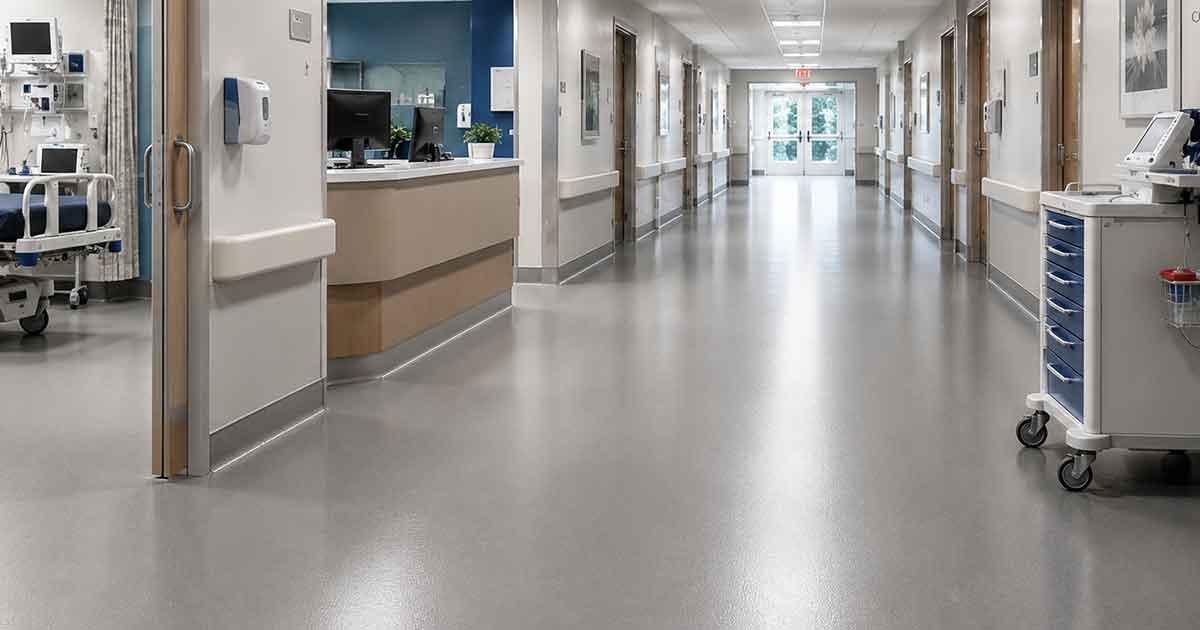
Corridors experience constant foot traffic from patients, medical staff, visitors, and equipment. Durable epoxy flooring can provide a hard-wearing surface designed for these demanding conditions.
Slip resistance and the ability to maintain safe walking surfaces should be considered during system selection.
Laboratories and Diagnostic Rooms
Medical laboratories may be exposed to reagents, cleaning chemicals, and occasional spills. Chemical-resistant epoxy flooring can be an appropriate solution when its specifications match the laboratory’s actual exposure conditions.
Patient Rooms and Treatment Areas
Patient rooms and treatment areas need flooring that is easy to maintain and suitable for regular cleaning. An appropriately selected epoxy system can provide a seamless surface with a clean, professional appearance.
Comfort, acoustics, slip resistance, and the needs of patients using mobility aids should also influence the flooring decision.
Pharmacies and Medical Storage Areas
Hospital pharmacies and storage rooms benefit from durable surfaces that can tolerate routine cleaning and equipment movement. Epoxy flooring can help maintain an organized, professional environment when matched to the area’s operational requirements.
Types of Epoxy Flooring Systems for Healthcare Facilities
Not every hospital area requires the same flooring specification. Common options include:
Self-Leveling Epoxy Flooring: Provides a smooth, uniform finish and is suitable for selected healthcare areas where a seamless surface is required.
Anti-Slip Epoxy Flooring: Incorporates suitable aggregates or surface textures to improve traction in areas where slip hazards may occur. The level of texture should balance slip resistance with effective cleaning.
Chemical-Resistant Epoxy Flooring: Designed for environments exposed to specified chemicals, including certain laboratory and medical processing areas.
Antistatic or Conductive Flooring: Specialized systems may be required in designated medical or technical environments. The correct electrical properties must be verified against the facility’s requirements; ordinary epoxy flooring should not be assumed to provide static control.
Key Factors to Consider Before Installation
Before choosing hospital epoxy flooring, facility managers and contractors should evaluate several important factors.
Surface Preparation
Concrete must be assessed and prepared to achieve suitable adhesion. This may involve mechanical grinding, removal of contaminants, crack repairs, and moisture testing.
Poor surface preparation is a common cause of coating failure.
Slip Resistance
Hospital floors may become wet during cleaning or because of spills. The flooring system should provide an appropriate level of slip resistance for the intended environment while remaining practical to clean.
Chemical Compatibility
The flooring specification should account for the disinfectants, detergents, and chemicals used in each department.
Installation and Curing Time
Hospitals often operate continuously, making downtime a significant concern. Installation should be planned around access restrictions, ventilation requirements, curing times, and safe reopening procedures.
Compliance and Healthcare Requirements
The chosen flooring system should meet applicable local building requirements and the healthcare facility’s relevant hygiene, safety, and performance specifications. Specialized areas may require additional technical testing or documentation.
Hospital Epoxy Flooring Installation Process
A professional installation process generally includes the following stages:
- Site Inspection: Assess the existing floor, concrete condition, traffic levels, moisture, and operational requirements.
- Surface Preparation: Mechanically prepare the substrate and remove dust, oil, loose material, and contaminants.
- Repairs and Priming: Repair suitable defects and apply the specified primer to promote adhesion.
- Epoxy Application: Install the selected epoxy system according to the manufacturer’s technical instructions.
- Protective Finish: Apply a compatible topcoat or additional treatment when required by the specification.
- Curing and Inspection: Allow the system to cure fully, inspect the finish, and verify that the floor is ready for its intended use before reopening the area.
The installation method and required thickness depend on the selected flooring system and project specifications.
How Much Does Hospital Epoxy Flooring Cost?
The cost of hospital epoxy flooring depends on several factors, including:
- Total floor area.
- Existing concrete condition and repair requirements.
- Type and thickness of the epoxy system.
- Chemical-resistance and slip-resistance requirements.
- Moisture mitigation or specialized electrical properties.
- Site accessibility and installation schedule.
- Labor, materials, and project location.
A site inspection and a clearly defined technical specification are recommended before preparing a quotation. This helps ensure the proposed flooring system meets the hospital’s operational requirements without unnecessary expense.
Epoxy Flooring Maintenance for Hospitals
Regular maintenance helps preserve the appearance and performance of epoxy floors.
- Follow the flooring manufacturer’s approved cleaning procedures.
- Use compatible detergents and disinfectants.
- Remove spills promptly using the facility’s established safety protocols.
- Avoid cleaning chemicals that may damage the selected coating.
- Inspect high-traffic areas regularly for wear, damage, or loss of slip resistance.
- Repair damaged sections promptly using a compatible system.
Maintenance schedules should reflect the facility’s infection-control procedures and the flooring manufacturer’s recommendations.
Why Choose Vertex Renovators for Hospital Epoxy Flooring?
Healthcare flooring projects require careful planning, appropriate materials, and professional installation. Vertex Renovators offers epoxy flooring solutions for commercial and industrial environments, with an emphasis on surface preparation, system selection, and durable finishes.
When planning a hospital flooring project, our team can help assess the site’s requirements and identify a suitable epoxy flooring approach based on the intended application.
Whether you are renovating hospital corridors, upgrading laboratory floors, or planning flooring for a new healthcare facility, selecting the right system is an important step toward long-term performance.
Conclusion
Hospital epoxy flooring can offer a durable, seamless, and easy-to-maintain surface for selected healthcare environments. Its benefits depend on choosing the correct formulation, preparing the substrate properly, and following the appropriate installation and maintenance procedures.
From corridors and laboratories to patient care areas, the right flooring specification can support cleaning routines, withstand daily use, and maintain a professional appearance.
Planning a hospital epoxy flooring project? Contact Vertex Renovators to discuss your requirements and explore a flooring solution tailored to your facility.
Vertex Renovators — Durable Flooring Solutions Built for Performance.
